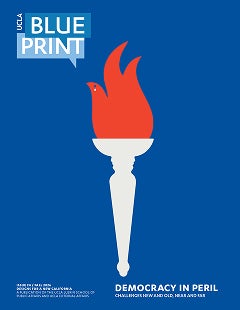
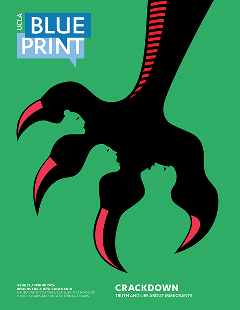








The articles in this issue of Blueprint do not paint a rosy picture of the state of democracy in the United States or around the world.
The Berggruen Governance Index reports that some democracies are suffering from “institutional drift and complacency.” Leading American lawyers and jurists see rising threats to the rule of law in this country. School teachers and principals warn of growing tensions among students as polarization worms its way into classrooms. The approaching American midterm elections offer opportunities for mischief and misunderstanding. Many Americans are on edge.
Today, democracy confronts deliberately sown doubts about election security, malevolent attempts to manipulate public opinion and concentrated efforts to thwart voting by less affluent and secure members of this society. The United States Supreme Court has discarded large chunks of the Voting Rights Act meant to protect the participation of minority voters. The president of the United States has suggested, without any basis, that large numbers of undocumented immigrants cast ballots in California and elsewhere. That’s false, of course, but it erodes public confidence in the very system that elected him and the rest of our representatives.
For democracy, these are difficult times.
But democracy is not just fragile. It’s also resilient. American democracy did not fold when rioters attacked the United States Capitol in a violent attempt to halt the certification of the 2020 presidential election. It buckled when the American South seceded and launched the Civil War, but it recovered in the long aftermath of America’s bloodiest conflict.
And it survives today. It does so because those most determined to save it refuse to allow others to take it from them. Those same lawyers and jurists whom UCLA professor Richard Hasen surveyed as part of the Safeguarding Democracy Project are committed to preserving the rule of law even as others try to whittle it away. The authors of the international index don’t just chronicle threats to democracy; they also supply guidance for defending it. And the teachers who worry about polarization’s effects on their students go to work every day and try to impart values of tolerance and humanity that transcend the evening news or the day’s trending social media post.
That may be most reassuringly at work at the most local levels of government. When it comes to revamping Los Angeles County government, for instance, the arguments are about how best to create institutional checks and balances, how much authority to give a countywide elected officer or how to refashion the Board of Supervisors into a more purely legislative body. Those may not have the riveting quality of national “threats to democracy,” but they engage democracy where it matters — elections, responsibility, delivery of service to constituents who need it.
We opened this issue with Churchill’s famous assessment of democracy as the worst system of government except for all the others. We close it with Churchill’s reminder that democracy’s strength and its resilience grow from the conviction that “the people should rule.”
As long as they do, there is hope for democracy, whether in Prague or Washington or Los Angeles.