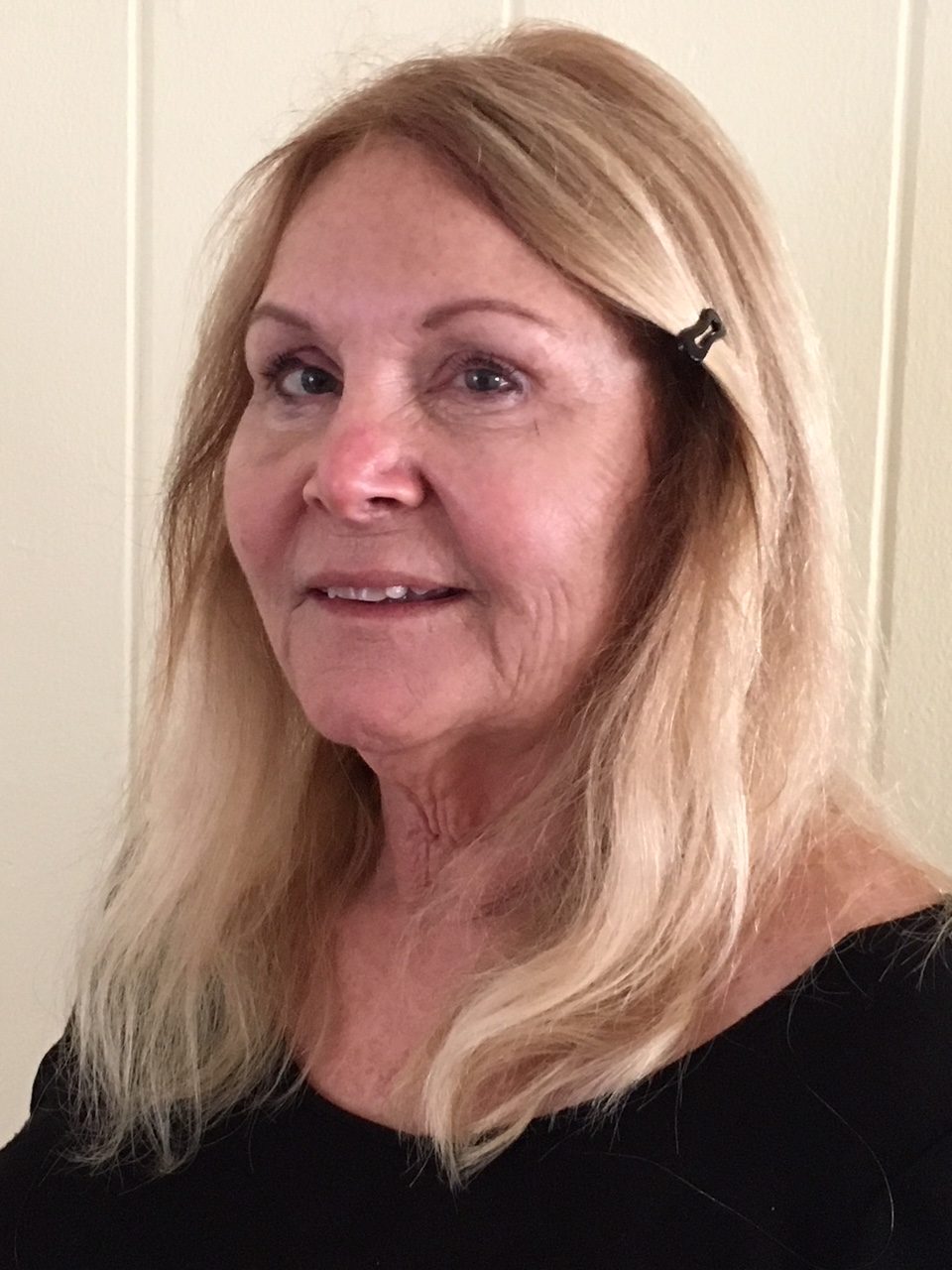
























May Sudhinaraset figures there are at least four generations of immigrants in her family. They started out in Indonesia and migrated to China, then moved to Thailand before eventually landing in the United States. Sudhinaraset was born and raised in Long Beach, California, surrounded by families with roots in Cambodia, Laos and other parts of Southeast Asia.
“I grew up with a lot of these communities, witnessed a lot of the discrimination and the challenges that this population faced,” said Sudhinaraset, a professor and vice chair of the Department of Community Health Sciences at the UCLA Fielding School of Public Health.
While her neighbors’ circumstances seemed “normal” to her as a child who had not yet seen anything different, they set her on a path that would define her career as an adult. Her experiences eventually led her to a PhD from Johns Hopkins University, her professorship at UCLA and an impressive — and timely — body of research on immigrants and healthcare.
Initially, she focused on global healthcare issues, collaborating with institutions and researchers in Myanmar, Kenya, India, Thailand and China. But becoming a mother and seeing tightened reproductive rights, stepped-up immigration enforcement and an “increase in anti-immigrant sentiment” a few years ago, she said, caused her to concentrate more on what was happening in her home country.
Sudhinaraset was chosen to lead a multi-year study of the sexual and reproductive health of Asian immigrant women in the United States. The $3 million study, funded by the National Institutes of Health, was the first to assess the health status and healthcare use of undocumented Asian and Pacific Islander young adults. The study includes participants in California, New York, Texas and Georgia. It is a joint effort of UCLA, UC Irvine, Rutgers University and the National Asian Pacific American Women’s Forum.
“One of the things that I try to do with my work is to provide scientific evidence and rigorous evidence toward understanding how policies and structures impact people’s health,” Sudhinaraset said during a recent interview in her office on the UCLA campus.
“I think the real power of public health research is to be able to document — to make sure — that we have the data. … It can take things out of the role of just emotional and anecdotal, although those are certainly important. But to be able to quantify things, and to measure things, and to show the impacts,” those are more important.
“Immigration policy is health policy”
Sudhinaraset said her research quickly led her to realize that immigration policy issues extend far beyond a simple matter of presence in a given country. “What we’re finding is that immigration policy is health policy, and it impacts so many different outcomes.
“It impacts people’s everyday lives.”
This includes whether to have children, she said, a particularly fraught decision in this time of heightened anti-immigrant sentiment fanned by the current federal administration.
“I think that what we’re finding right now is that [immigrants and even their American-born relatives, who are U.S. citizens] aren’t feeling safe, now that people are fearful, that family separation is happening, and that it might not even be a direct immigration enforcement experience, but even the perception that it is happening. I think uncertainty and fear impact the way people make decisions and plan their lives.”
Last year, Sudhinaraset expressed that view to the Daily Bruin. “Immigrants, particularly those who are undocumented, are fearing for their safety and that of their families.” She noted that undocumented immigrants “are much more likely to be [medically] uninsured compared to their documented peers, and are also more likely to delay care when they need it.”
Using vital statistics data from more than 3.5 million births, Sudhinaraset and her researchers confirmed what many who work with immigrants and other disadvantaged populations have long believed: “When you have inclusive immigrant policies, it is good for people’s birth outcomes,” she said. “When you have criminalizing policies, it is really detrimental to birth outcomes.”
For example, when a worker speaks a woman’s native language, it improves communication and confidence, and the woman is more likely to return for additional prenatal care. When she feels criticized or judged, she is discouraged from seeking further care, which in turn can threaten her and her baby’s health. Rather than criticize a woman for having many children or getting pregnant at an advanced age, it is more effective to talk to a woman about how pregnancy is rigorous and that multiple pregnancies can undermine a mother’s health, researchers found.
Policy and pregnancy
Interviews conducted by Sudhinaraset and co-researchers in 2018 and 2019 included remarks that illustrated difficulties encountered by immigrant mothers during pregnancy and childbirth.
- “English is one of the things that has closed doors to me in many places and made it quite difficult for me, appointments and all, because I do not speak English,” recounted an undocumented immigrant from Mexico.
- A Chinese woman with a visa said: “There was one time I saw a doctor who speaks Chinese but has too many patients, like she’s working an assembly line. … There are so many patients in line!”
- Another undocumented woman from Mexico told of being pressured to have a hysterectomy: “The doctor started saying, ‘Have you thought about having an operation? You have to be operated on because you are quite old to continue having children. You don’t have to think about it, you have to do it!’ She was mad and asked why I had so many kids at the age I was, and I didn’t like that treatment.”
Sudhinaraset said she does not blame healthcare workers for the inequities that stem from what she calls “an under-resourced healthcare system.”
One of her research goals is “highlighting how the inequities that we see across populations isn’t because of lack of effort or lack of knowledge or people not wanting to do something,” she said. “It’s really that the policies aren’t designed with certain populations in mind.
“What I would love to see come out of this work is a deeper understanding of how policies really impact communities, that they impact their whole lives, from financial, to whether they’re still able to be here, to their aspirations and sense of safety and resilience in this country,” she said. Then, after thinking a moment longer, she added a further wish:
“I spend a lot of time thinking about the institutions and the practices within healthcare, ensuring that there is culturally concordant, trauma-informed, person-centered care, so that people feel valued and respected…and that they don’t feel judged.”