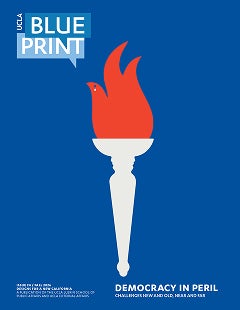
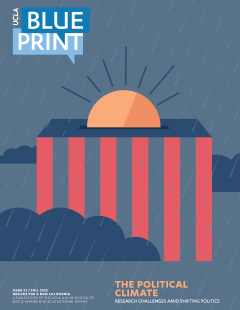
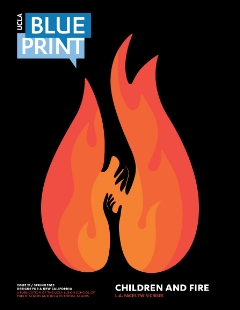
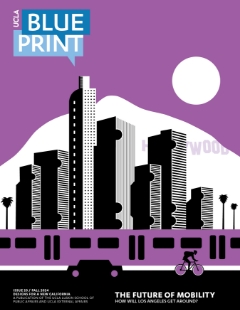












Reflecting on the parliament act during a 1947 debate, Winston Churchill famously framed democracy as “the worst form of government except all those other forms that have been tried from time to time.” Like so many of Churchill’s observations, that one is often misquoted, misunderstood or misrepresented, twisted to suggest he lacked faith in democracy or to suggest that his confidence in it was failing.
To the contrary, democracy was, in Churchill’s view and in the experience and research reflected in this issue of Blueprint, the only system that reliably adheres to the interests of the public it attempts to represent. No one claims perfection for it. Churchill acknowledged that it was not “all wise.” But democracy rests on the premise that the people are sovereign and that they — we — are entitled to govern ourselves.
Why, then, is democracy under such pressure today — in the United States, in state and local governments and around the world? And how is democracy holding up under that pressure? Those are the questions at the heart of this issue of this magazine.
The research featured here covers the gamut — from the shaky state of some democracies around the globe, to the frazzled nerves around the upcoming U.S. midterms, to the complicated efforts to refashion the governmental structures of Los Angeles city and county government. All of those projects are consequential and difficult, and all are made harder by swirling falsehoods that undermine public confidence in elections and their outcomes, here and abroad.
At the level of Los Angeles County, the search for effective government starts with questions about representation. A government that represents nearly 10 million people but has never had an elected leader responsible for all of it is about to get one. That’s a step forward for representation, as is the county’s project to expand the board of supervisors, but the devil is very much in the details. Throwing elected officials at a problem can help, but it might not. The American architecture of checks and balances has never been replicated by Los Angeles County; now it’s embarked on the difficult process of trying to do so.
At the level of the federal government, other issues dominate. President Donald Trump and his supporters have railed about election security ever since 2016, when Trump complained that millions of California votes were illegally cast by noncitizens, a claim that he has never come close to substantiating. But in an era where facts seem to matter less and less, the mere doubt looms large over the midterms, an ominous gathering of storm clouds that may test Americans’ confidence in elections — and each other.
Elections are the fulcrum of any democratic system, which elevates representation as the key to government’s usefulness. But even reliable elections do not guarantee democratic success. People want their voices heard and their needs met. That’s where democracy — whether seated in Washington, Sacramento or the county Hall of Administration — either delivers or fails.
The often-misquoted Churchill, in fact, made that clear in the same speech that is so often clipped for the purposes of the quoter. Here, then, is the rest of Churchill’s thought: “There is the broad feeling in our country that the people should rule, continuously rule, and that public opinion, expressed by all constitutional means, should shape, guide, and control the actions of ministers who are their servants and not their masters.”
That is the test of democracy.